Nmap
PORT     STATE SERVICE    VERSION
22/tcp   open  ssh        OpenSSH 8.4p1 Debian 5+deb11u1 (protocol 2.0)
| ssh-hostkey:
|   3072 c9:c3:da:15:28:3b:f1:f8:9a:36:df:4d:36:6b:a7:44 (RSA)
|   256 26:03:2b:f6:da:90:1d:1b:ec:8d:8f:8d:1e:7e:3d:6b (ECDSA)
|_  256 fb:43:b2:b0:19:2f:d3:f6:bc:aa:60:67:ab:c1:af:37 (ED25519)
80/tcp   open  http       nginx 1.18.0
|_http-server-header: nginx/1.18.0
8082/tcp open  http       Barracuda Embedded Web Server
|_http-title: Home
| http-methods:
|_  Potentially risky methods: PROPFIND PATCH PUT COPY DELETE MOVE MKCOL PROPPATCH LOCK UNLOCK
|_http-server-header: BarracudaServer.com (Posix)
9999/tcp open  ssl/abyss?
| ssl-cert: Subject: commonName=FuguHub/stateOrProvinceName=California/countryName=US
| Subject Alternative Name: DNS:FuguHub, DNS:FuguHub.local, DNS:localhost
| Not valid before: 2019-07-16T19:15:09
|_Not valid after:  2074-04-18T19:15:09
|_ssl-date: 2026-08-03T23:44:34+00:00; -1s from scanner time.
Enumeration
Port 80 is forbidden, moving on.
Port 8082 is running something called Barracuda. We are able to create an admin user. Once inside the app we navigate to the About page and discover that this is running FuguHub 8.4.
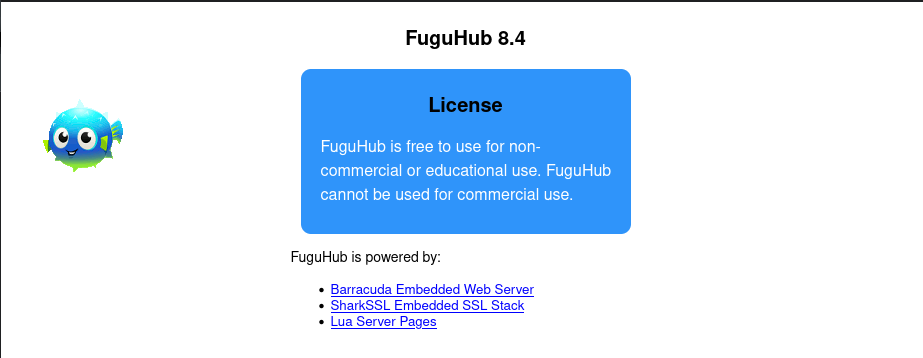
Searched on Google for a FuguHub exploit and found an RCE exploit for our version. Simple as grabbing the exploit and setting up a listener. Only tweaking that needed to happen was adding our admin credentials inside the script.


Done!